Quick answer
Most indoor Ethernet runs do not need shielding — unshielded U/UTP Cat6 or Cat6a is fine. Spec shielded (F/UTP or S/FTP) when you run near heavy electrical noise, dense high-wattage PoE, or 10 Gigabit in a tight bundle. But a shield only works if it is bonded to ground at one end through shielded connectors — done wrong it does nothing, or adds a ground loop. Kestner builds shielded cable with the drain and connectors specified. See ANSI/TIA-568.
The short version
- Most indoor runs do not need shielding — U/UTP is lighter, cheaper, and easier to terminate. Shield only when the environment or the speed demands it.
- The three reasons to shield: heavy EMI (motors, industrial gear, shared cable trays), dense high-wattage PoE, or 10 Gigabit in a tight bundle.
- A shield is only as good as its ground: bond the drain at one end through shielded (metal) connectors. Unbonded it does nothing; grounded at both ends it can add a ground loop.
- The ladder: U/UTP (none) → F/UTP (overall foil) → U/FTP (foil per pair) → S/FTP (braid + foil). More shield means a stiffer cable that is harder to terminate.
Most Ethernet runs do not need shielding — and a shielded cable installed wrong is worse than an unshielded one. That is the part the product listings leave out: the foil or braid inside a shielded cable does nothing on its own; it only rejects interference when it is bonded to ground through the connectors, and a shield left floating can act as an antenna. So the question is not “is shielded better” but “does this run have a reason to shield, and will it be terminated to actually work.” Here is when to spec shielded Ethernet, the four constructions, the grounding trap that catches most installs, and what to check when you source it. For where shielding sits in the wider category ladder, see the Ethernet cable types guide.
When you actually need shielded Ethernet
Unshielded (U/UTP) is the right default for indoor Ethernet — it is lighter, cheaper, bends easier, and terminates faster. The pair twist alone rejects most noise. Shielding earns its cost and its handling penalty in three situations, and you should be able to name which one applies before you spec it:
- Real electrical noise — the industrial case. Runs beside motors, drives, welders, fluorescent ballasts, or power cable sharing a tray or conduit. This is where industrial Ethernet cable earns its name: shielded twisted pair that system integrators and building-automation buyers spec by default on a plant floor.
- Dense, high-wattage PoE. A tight bundle of cables each delivering high-power PoE builds heat, and a foil screen helps conduct it away; it is one reason Cat6a is often foiled.
- 10 Gigabit in a bundle. At 10GBASE-T the limit is alien crosstalk — interference from the cable next to it — and a shield is what lets Cat6a hold 10 Gigabit in a tightly packed bundle where unshielded would derate.
If none of those apply — a home, a quiet office, ordinary 1-Gigabit runs — unshielded is not a compromise, it is the correct choice.
The four constructions, from none to full
Shielding is a ladder, and the naming tells you exactly what is inside: the letter before the slash is the overall screen, the letter after is the per-pair screen (U = none, F = foil, S = braid).
| Construction | Screen | Stiffness | Where it fits |
|---|---|---|---|
| U/UTP | None — twist only | Lowest | Most indoor runs; home and office |
| F/UTP | One foil around all pairs | Low–medium | 10G Cat6a; moderate EMI and PoE heat |
| U/FTP | Foil around each pair | Medium | 10G Cat6a in bundles; alien crosstalk |
| S/FTP | Braid overall + foil per pair | Highest | Cat8, heavy EMI, industrial runs |
More shield means better noise rejection but a stiffer cable, a larger bend radius, and a harder, slower termination. Do not buy more shield than the run needs — over-shielding costs money and installer time and buys nothing in a quiet environment.
The grounding trap most guides skip
This is where shielded installs go wrong. A shield is only a shield when it is electrically continuous from the cable, through a metal-bodied (shielded) RJ45 plug or keystone, to a grounded patch panel or rack. Three ways it fails:
- Terminated in plastic. A shielded cable crimped into an ordinary unshielded (plastic) connector is just heavier, pricier U/UTP — the drain goes nowhere.
- Left floating. A shield connected at neither end can pick up and re-radiate noise, acting as an antenna — measurably worse than no shield.
- Grounded at both ends, badly. Bonding both ends where the two grounds sit at different potentials creates a ground loop: a current circulates through the shield and injects the very interference you were trying to remove.
The classic rule is to bond one end — usually the rack — so the shield drains without a loop. Structured-cabling practice (ANSI/TIA-607) assumes a properly bonded building where the shield is grounded at the equipment and the bonding network handles the rest. Either way, the shield has to reach a real ground through shielded connectors — that is the whole job.
Shielded vs unshielded: the trade-offs
Shielding is not free beyond the price per foot. Shielded cable is stiffer and heavier, needs a larger bend radius, fills conduit faster, and takes longer to terminate correctly — every joint has to carry the drain. It also wants shielded jacks, patch panels, and a bonding path, so the cost is the system, not the reel. Against that, in the right environment it is the difference between a link that certifies and one that fails alien-crosstalk or noise. The takeaway is not “shielded is premium” — it is “match the shield to the run,” and most runs do not need one.
How to source and verify shielded cable
Sourcing shielded cable means buying the whole shielded path, not just a screened jacket. Confirm four things: the construction printed on the legend (F/UTP, U/FTP, or S/FTP — matched to why you are shielding); a bare drain wire and a continuous foil or braid you can see when you strip it; shielded, metal-bodied connectors and jacks to match; and bare copper, not copper-clad aluminum, under the screen. Then confirm the install will bond it — because an unbonded shielded plant is money spent to carry heavier cable. To source shielded and unshielded Cat cable specified to the run, see Ethernet / Cat cables.
Frequently asked
Do I need shielded Ethernet cable?
Usually not. For a home or office indoor run, unshielded Cat6 or Cat6a is fine. Shielding earns its cost in three cases: when you run near strong electrical noise (motors, industrial equipment, fluorescent ballasts, or power cable in the same tray), when you run dense high-wattage PoE that needs help shedding heat, or when you push 10 Gigabit through a tightly bundled Cat6a or Cat8 run where alien crosstalk is the limit. Outside those cases, unshielded is lighter, cheaper, and less error-prone.
What is the difference between shielded and unshielded Ethernet cable?
Unshielded cable (U/UTP) relies only on the twist of its pairs to reject noise. Shielded cable adds a metal screen — a foil around all pairs (F/UTP), a foil around each pair (U/FTP), or a braid plus per-pair foil (S/FTP) — that drains interference to ground. The shield helps in noisy environments and controls alien crosstalk at 10 Gigabit, but it only works when it is properly bonded, and it makes the cable stiffer and harder to terminate.
How do you ground a shielded Ethernet cable?
Through shielded, metal-bodied RJ45 connectors and shielded keystone jacks or patch panels that carry the drain to a grounded rack or panel, per ANSI/TIA-607 bonding practice. A shield terminated in a plastic connector, or left floating, provides no benefit and can act as an antenna. The shield has to be electrically continuous from cable to connector to a real ground.
Do you ground both ends of a shielded cable?
Convention splits here. The classic EMC rule grounds one end to avoid a ground loop — a small current flowing through the shield between two grounds at slightly different potentials, which can inject the noise the shield was meant to stop. Structured-cabling standards assume a properly bonded building where the shield is grounded at the equipment and the bonding network handles the difference. The safe default for a single run is one end; for a whole shielded plant, bond per the ANSI/TIA-607 design.
How can I tell if an Ethernet cable is shielded?
Check the jacket print and the connector. Shielded cable is marked with its screen type (F/UTP, S/FTP, or STP) and is noticeably stiffer and thicker; a shielded plug has a metal body and often a drain tab, where an unshielded plug is all plastic. On bulk cable, strip a few inches — a foil wrap or braid under the jacket, plus a bare drain wire, means it is shielded.
What is industrial Ethernet cable?
Industrial Ethernet cable is shielded twisted pair (usually F/UTP or S/FTP) built for the plant floor — a tougher jacket, sometimes armor or a high-flex construction, and always a screen to survive the electrical noise from motors, drives, and welders. It is the default in industrial and building-automation runs for the same reason shielding exists: to keep interference off the pairs and drain it to ground.
Sources
- Balanced twisted-pair cabling, incl. screened constructionsANSI/TIA-568.2
- Telecommunications bonding & grounding (earthing)ANSI/TIA-607
- 10GBASE-T alien crosstalk & PoE physical layersIEEE 802.3
More in this cluster
Products in this line
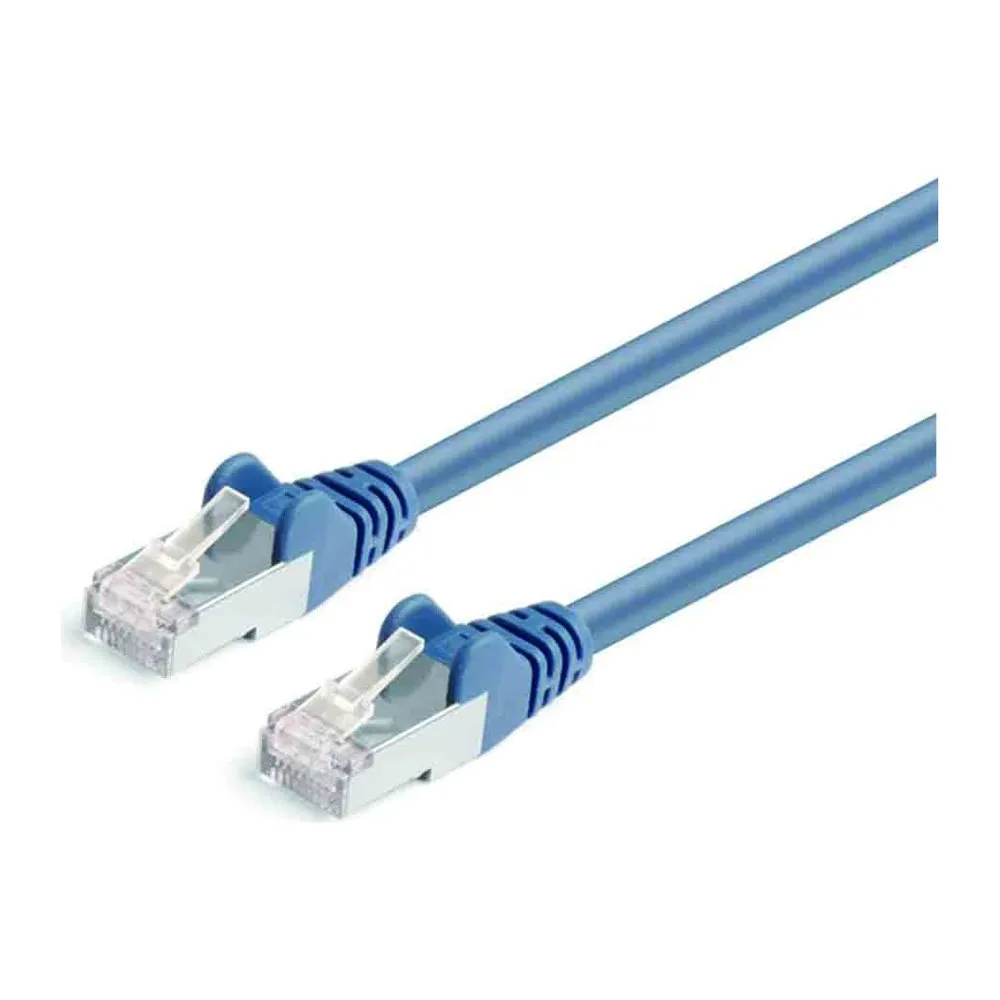 Ethernet / Cat cablesShielded and unshielded Cat6/Cat6a and Cat8, with the drain and connectors specified.View →
 Custom cable assembliesShielded patch cords terminated to bonded, metal-bodied connectors and tested.View →
 Fiber optic cablesWhen the run is too noisy for copper, fiber carries no current and needs no ground.View →
Ready to source this to spec?
Kestner builds shielded and unshielded Cat cable in its own factories, to a real spec — the screen type, a bonded drain, and metal-bodied connectors that actually ground it — so a shielded install performs like one. One US company that builds the connectors and the bonding into the assembly, not just the cable.
Request a quote