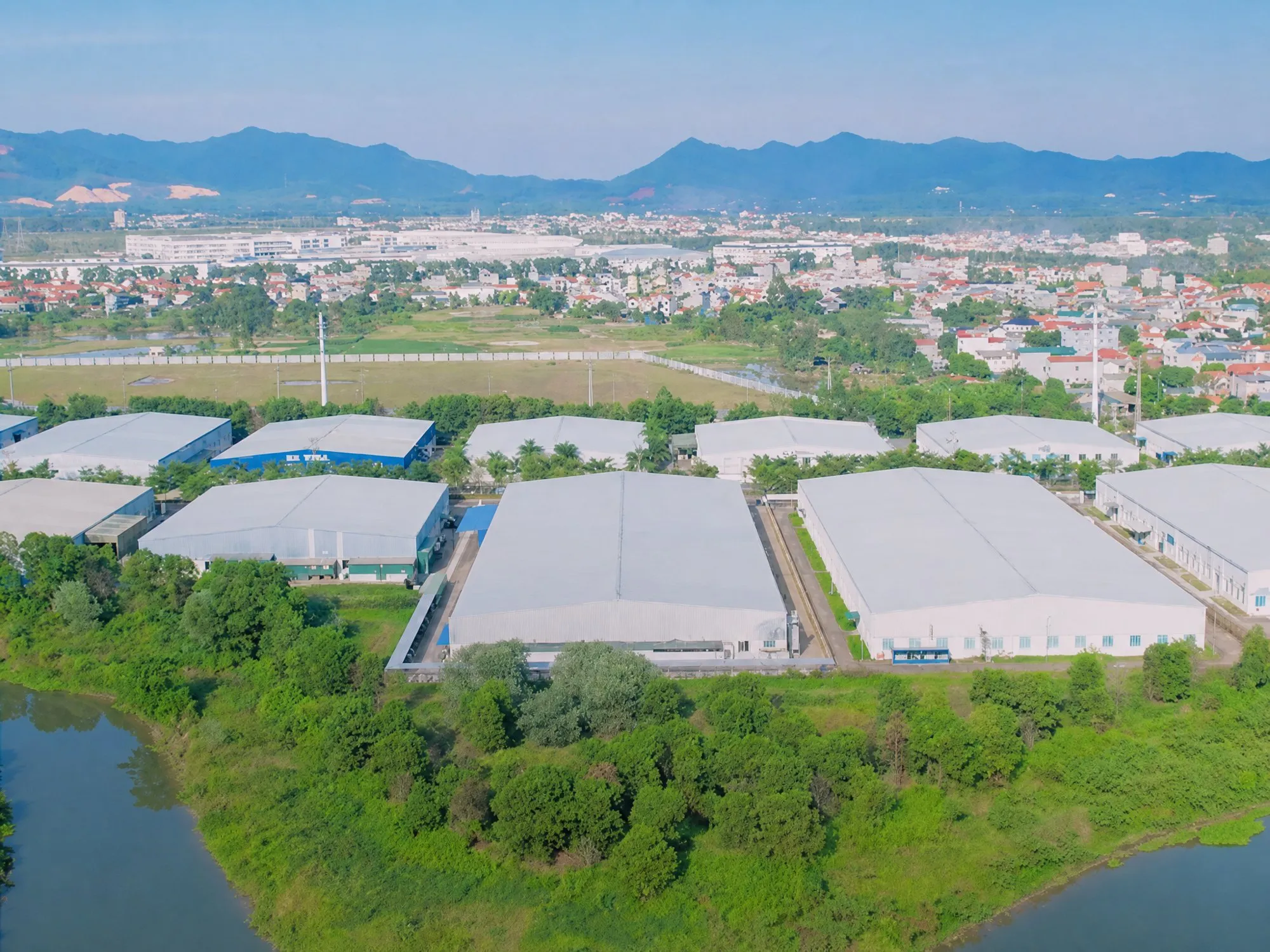
Same part, one drawing set, one UL file, both of our plants. You elect the country of origin on the purchase order — and shift the split as tariffs move — because Kestner actually builds the product in both countries, not because a label changes.
You get to choose the country of origin because Kestner actually manufactures the same product in both China and Vietnam — real production and substantial transformation on our own lines in each country, on one drawing set and one UL file. It is a manufacturing fact you can document per unit, not a label swapped in transit.
0Countries of origin · CN + VN
0Drawing set & UL file
0New suppliers to qualify
0China §301 duty you can shed
How origin election works.
A China-plus-one strategy usually means standing up a second factory in another country. Here the second origin is already built — so electing it is four steps, not a program.
01
One engineering system, both plants
The same part builds on one drawing set, one bill of materials, and one UL file in both our China and Vietnam plants. There is no second design, no second qualification.
02
You elect origin at the PO
On the purchase order you name the country of origin you want — China or Vietnam. Production runs on that plant’s line; nothing about the part number or the spec changes.
03
Origin documented per shipment
Every shipment carries a certificate of origin and the HTS classification, referencing the commercial invoice and bill of lading — so your broker enters it correctly.
04
Shift the split as tariffs move
When the duty schedule changes, move volume between the two plants. There is no new supplier to stand up, so the response is a PO revision, not a six-month project.
Both origins carry the same base duty and the same all-origin layer — the forced-labor duty on most codes, or the Section 232 copper duty on connectorized cable. What Vietnam origin sheds is the 25-point Section 301 duty that applies only to Chinese origin — on the identical part, and it is the same 25 points on every line below. These are the current effective rates on the codes our catalog actually classifies under, single-sourced from ourduty stack.
What you import
HTS
China
Vietnam
You shed
Power adapters & switching supplies
8504.40.85
37.5%
12.5%
−25 pts
USB-C, HDMI, Ethernet & AV assemblies
8544.42.90
52.6%
27.6%
−25 pts
Coaxial cable
8544.20.00
42.8%
17.8%
−25 pts
Effective rates verified against the USITC HTSUS (Rev. 19). Every figure is cited to its authority in the duty stack; run your own bill of materials in the landed-cost calculator.
The math on a hypothetical order
On a $250,000 entered value of Chinese-origin adapters, electing Vietnam origin sheds 25% — about $62,500 in duty. At a 10% net margin, that is the profit on roughly $625,000 of revenue you did not have to sell.
This is what separates an origin election from a China-plus-one project. You are not adding a supplier — you are choosing which of one manufacturer’s two plants builds a part you have already approved.
No requalifying a new supplier
Both origins are the same manufacturer on the same drawings — not a second vendor your team has to audit, sample, and approve from zero.
No second UL file
The safety file that lists the part does not change with the country of origin. You are not re-listing a product or explaining a new file number to your own customer.
No second vendor audit
One quality system, one test procedure, one accountable US contact — across both plants. A China-plus-one project usually means duplicating all of that in a new country.
Vietnam origin is only worth as much as the production behind it. Ours holds up because there is real production behind it — the number you plan against is the number that clears customs.
Substantial transformation
The good is genuinely transformed in the country of origin — the winding, the board, the assembly, and final test — which is what confers origin under the rules of origin. Final relabeling does not, and we do not do it.
Real production, in-house
We own the line in each country. The Vietnam-origin unit is built in Vietnam, not shipped in from elsewhere and re-marked — the distinction between manufacturing and transshipment.
Documented per unit
The certificate of origin, the HTS classification, and the substantial-transformation basis ship with each order — a file that stands on its own, not a claim on a carton.
This page explains how we manufacture and document origin; it is background, not customs or legal advice for your specific entry. Your customs broker or counsel makes the final classification and origin call — and for a specific SKU we can help prepare a binding-ruling request so it is settled in advance.
Can I choose the country of origin for each order?
Yes. You elect China or Vietnam on the purchase order, and you can elect differently from one order to the next. The part number, drawings, UL file, and test procedure are identical either way — only the plant that builds it, and the country of origin that ships with it, change.
Is the Vietnam origin genuine, or is it just transshipment?
Genuine. We actually manufacture the product in Vietnam — winding, board build, assembly, and final test on our own line — so the good is substantially transformed there, which is what confers Vietnamese origin. That is the opposite of transshipment, where a Chinese-made unit is relabeled in transit. We document the substantial-transformation basis per unit, and the certificate of origin stands on its own.
Do I have to requalify the product if I switch origin?
No. Both plants build to one drawing set and one test procedure, so the part your engineering team approved is the same part regardless of origin. There is no new supplier to qualify and no re-sampling from zero — the switch is a purchase-order change, not a new-vendor project.
Does my UL file still apply in both countries?
Yes. The UL file lists the product, not the country, and the same file covers the part built in either plant. You keep one file number, verifiable by that number, instead of re-listing the product for a second source.
Can I split one order’s volume across both plants?
Yes. We can run part of a program in China and part in Vietnam — a common way to hold existing China capacity while moving tariff-exposed volume to Vietnam. Each shipment is documented to its own country of origin, so your entries stay clean.
Do you provide a certificate of origin?
Every shipment ships with a certificate of origin and the HTS classification, referencing the commercial invoice and bill of lading. For a specific SKU we can also help prepare a CBP binding-ruling request so the origin and classification are settled in advance.
One manufacturer. Two origins. You elect.
The same part, one drawing set, one UL file, built in both China and Vietnam behind a US company you can hold accountable — so the origin on your entry is a decision you make, documented per unit, not a risk you inherit. Tell us the part and the origin you need below.
Tell us the part and the origin you need — China, Vietnam, or a split — and we’ll quote it with the duty math shown. A person answers, usually within one business day.