Quick answer
A medical power supply is one built and tested to IEC 60601-1 — not a marketing label but a standard: defined means of patient protection (MOPP) and patient-leakage limits in the microamp range, far below an ordinary ITE (UL 62368-1) supply. How strict depends on the applied-part type (B, BF, or CF). Kestner builds AC/DC supplies to IEC 60601-1 on request. Start with IEC 60601-1.
The short version
- "Medical-grade" means built and tested to IEC 60601-1 — a defined standard, not a marketing word. Ask for the number, not the adjective.
- The dividing line is protection and leakage: medical supplies provide means of patient protection (MOPP) and hold leakage in microamps, where an ordinary supply provides only operator protection (MOOP) at milliamp leakage.
- How strict scales with the applied-part type — B, BF (body-float), or CF (cardiac-float, the tightest at ~10 µA patient leakage).
- A part that touches a patient usually needs 2× MOPP of isolation, which means more creepage/clearance and a higher dielectric-withstand test than an operator-only barrier.
- A UL 62368-1 supply is not a medical supply — it provides MOOP, not MOPP. Specify 60601 up front; it is a different product, not an upgrade.
“Medical-grade” is one of the most abused phrases in power. On a real quote it means something exact — the supply is designed and tested to IEC 60601-1, the medical electrical safety standard — and on a bad one it means nothing at all. The gap between the two is not cosmetic: a medical supply holds leakage current a hundred times lower than an ordinary one and isolates the patient from the mains to a defined level, because the person at the end of it may be unconscious, wet, or wired to their heart. Here is what actually makes a power supply medical-grade, how it differs from the ITE supply next to it on the shelf, and how to spec and source one without buying the adjective instead of the standard.
What makes a power supply “medical-grade”
BLUF: medical-grade means built and tested to IEC 60601-1 (adopted in the US as ANSI/AAMI ES60601-1) — nothing more, nothing less. That standard changes two things versus an ordinary supply: the means of protection it provides, and the leakage current it is allowed to pass.
The distinction that trips buyers is MOOP versus MOPP:
| MOOP — operator protection | MOPP — patient protection | |
|---|---|---|
| Protects | The operator / user | The patient |
| Roughly equals | Ordinary ITE safety (IEC 62368-1) | The medical requirement (IEC 60601-1) |
| Leakage | Milliamps | Microamps |
| Isolation | Standard creepage / clearance | Greater creepage / clearance, higher dielectric test |
The trap in one line: a UL 62368-1 supply provides MOOP, not MOPP. It is a fine IT supply and not a medical one, and no amount of “medical-grade” in the listing changes that. If the application needs patient protection, the supply has to be a 60601 design from the start — a different product, not an upgrade you bolt on.
Leakage current: the number that defines medical
BLUF: the single figure that separates a medical supply from an ordinary one is leakage current, and 60601 pulls it down into microamps. How far down depends on the applied-part type — how the equipment connects to the patient:
| Applied-part type | Patient leakage (normal / single-fault) | Where it applies |
|---|---|---|
| Type B | 100 µA / 500 µA | No conductive patient connection; low risk |
| Type BF (body-float) | 100 µA / 500 µA | Isolated patient contact, non-cardiac |
| Type CF (cardiac-float) | 10 µA / 50 µA | Direct cardiac connection — the strictest |
Figures per IEC 60601-1. Alongside patient leakage, the standard also caps earth leakage (about 5 mA normal / 10 mA single-fault) and touch (enclosure) leakage (100 µA / 500 µA). For comparison, an ordinary ITE supply is allowed touch current in the milliamp range — an order of magnitude or more looser. Those microamp patient limits are the practical definition of “medical-grade,” and the reason a medical supply is a different design, not a relabel.
1× MOPP, 2× MOPP, and the isolation barrier
A “means of protection” is a barrier — insulation, creepage and clearance distance, or a protective earth — and 60601 counts them. A patient-connected design typically needs two independent means of patient protection (2× MOPP) between the mains and the patient, so that no single failure can put mains potential on the patient.
Two MOPP is not free. Compared with an operator-only (MOOP) barrier, it demands more creepage and clearance across the isolation and a higher dielectric-withstand (hi-pot) test — on the order of 4 kVAC for a 2× MOPP mains-to-patient barrier at typical working voltage, versus roughly 1.5 kVAC for an operator barrier. That extra isolation is why a medical supply is physically larger and more expensive than an ITE unit of the same wattage, and why you cannot close the gap by testing an ordinary supply harder.
Beyond 60601-1: EMC, environment, and the US mark
Safety is the headline, but a medical supply carries more:
- EMC to IEC 60601-1-2 — the clinical electromagnetic environment is its own standard, with immunity levels set for equipment that sits near life-support and RF sources.
- The US mark — ANSI/AAMI ES60601-1 is the US adoption; a device sold into US hospitals is expected to carry it, alongside the applicable FDA pathway for the device (the supply is a component of that, not a substitute for it).
- Reliability and quiet — longer service life, low acoustic noise, and defined behavior on a mains dropout matter more in a clinical setting than a commercial one.
Name the standard and the applied-part type up front, because they set the whole design — the transformer, the isolation, the filter, and the size.
Speccing and sourcing a medical supply
To get a real medical quote, send more than volts and amps: the output, the form factor (external medical adapter or internal open-frame/enclosed supply — the supply-versus-adapter choice), the applied-part type (B, BF, or CF), the agency (IEC 60601-1 / ANSI-AAMI ES60601-1, plus regional marks like PSE, KC, or BIS), and the volume. Gaps there are where the wrong protection level gets priced.
This is a build-to-spec exercise, not a shelf pick, and it is one Kestner takes on request: we build AC/DC supplies to IEC 60601-1 on request, external or enclosed, with the isolation and leakage designed to the applied-part type and a documented country of origin. The general spec-and-source discipline — the four axes, the RFQ, the origin math — is in the custom power supply sourcing guide; this page is the medical layer on top of it. Send the device, the applied-part type, and the output, and we will tell you straight what the build takes — and where a 60601 design is genuinely required versus where an ITE supply will do.
Frequently asked
What is a medical-grade power supply?
One designed and tested to the medical safety standard IEC 60601-1 (in the US, ANSI/AAMI ES60601-1). Compared with an ordinary information-technology supply, it provides means of patient protection, holds leakage current to microamp levels, uses reinforced isolation between the mains and any patient-connected part, and is tested for the clinical electromagnetic environment under IEC 60601-1-2. "Medical-grade" is that standard, not a marketing term.
What is the difference between a medical and a non-medical power supply?
A non-medical (ITE) supply is built to IEC/UL 62368-1 and provides means of operator protection (MOOP) with leakage limits in milliamps. A medical supply is built to IEC 60601-1, provides means of patient protection (MOPP), holds leakage in microamps, and uses greater isolation between mains and patient. You cannot substitute a 62368 supply where 60601 is required — the protection and leakage levels are different by design.
What is MOOP vs MOPP?
Both are "means of protection" in IEC 60601-1. MOOP (means of operator protection) protects the operator and is roughly equivalent to ordinary ITE safety. MOPP (means of patient protection) is stricter — lower leakage, more creepage and clearance, and a higher dielectric-withstand test — because it protects a patient who cannot react. A patient-contacting design typically needs two independent MOPP (2× MOPP) in the mains-to-patient barrier.
What is the leakage current limit for a medical power supply?
It depends on which current and which applied-part type. Under IEC 60601-1, earth leakage is limited to about 5 mA (normal) / 10 mA (single fault), touch (enclosure) leakage to 100 µA / 500 µA, and patient leakage to 100 µA / 500 µA for Type B and BF parts and just 10 µA / 50 µA for Type CF (cardiac). Those microamp patient limits are the practical definition of "medical-grade."
What is the difference between a medical power supply and a medical power adapter?
The same 60601 requirements, in two form factors. A medical power adapter is an external desktop or wall-mount unit outside the device; a medical power supply usually means an internal open-frame or enclosed unit built into the equipment. Choose the external adapter when you want the mains barrier and the agency file outside your enclosure; choose the internal supply when it has to fit inside the device. Both must meet IEC 60601-1 for their applied-part type.
Sources
- IEC 60601-1, medical electrical equipment — general requirements for basic safetyIEC
- IEC 60601-1-2, electromagnetic disturbances (medical EMC)IEC
- ANSI/AAMI ES60601-1 (US adoption of 60601-1)AAMI
- IEC/UL 62368-1, safety of IT & AV equipment (the non-medical contrast)UL
- Country-of-origin marking and entry treatmentUS Customs & Border Protection
More in this cluster
Products in this line
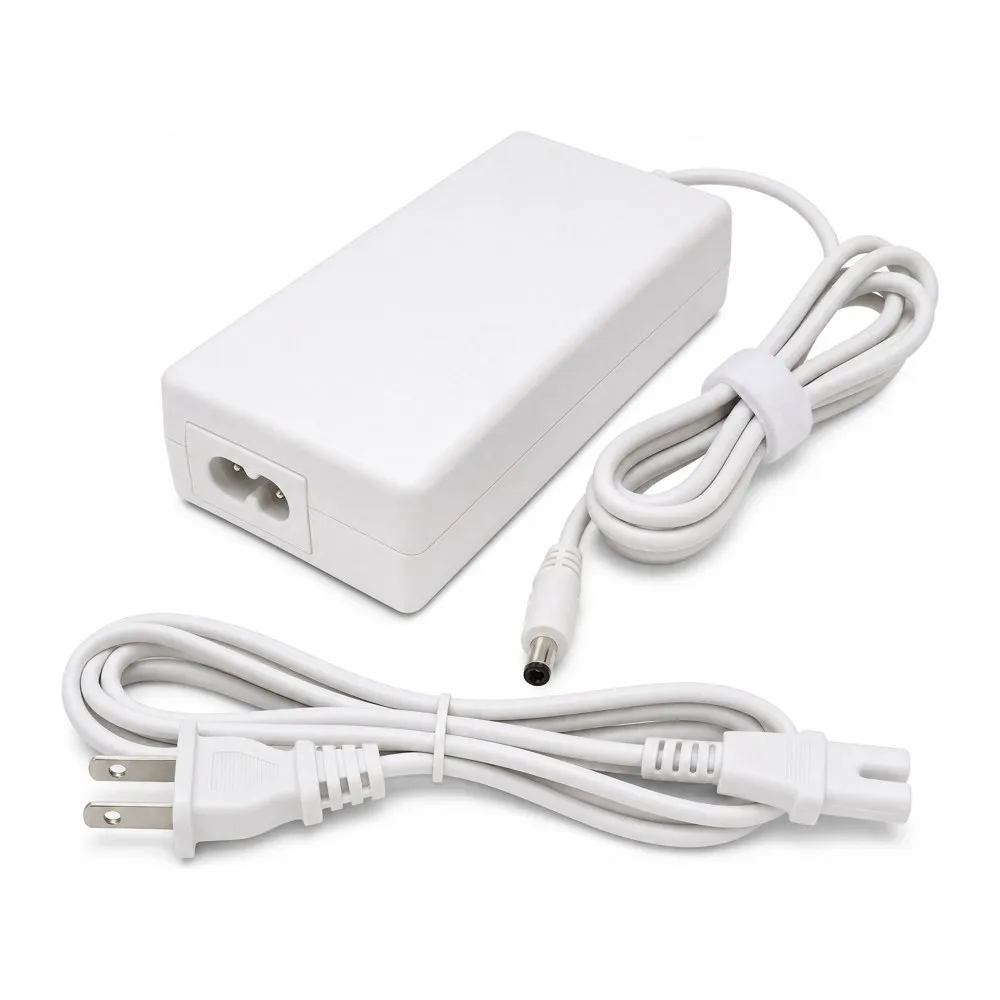 Custom & OEM power suppliesAC/DC supplies built to your output, form factor, and agency approvals — medical (IEC 60601) and industrial on request, origin-documented.View →Desktop power adaptersExternal desktop adapters to spec, DoE Level VI, with the safety file and the records — medical on request.View →
Ready to source this to spec?
Kestner is a US company that builds AC/DC power supplies to spec on its own lines — to IEC 60601-1 on request, external or enclosed, with the applied-part type, isolation, and leakage designed to the drawing and a China or Vietnam origin documented per unit. Send the device, the applied-part type, and the output, and we will tell you straight what the build takes.
Request a quote