Quick answer
IEC 60320 is the standard for appliance couplers — the C13, C14, C19 and C20 ends of a power cord. Odd numbers are connectors on the cord; even numbers are inlets on the equipment. C13/C14 carries 10 A under IEC and 15 A in North America; C19/C20 carries 16 A and 20 A. Kestner builds these cordsets on its own lines. The standard is IEC 60320-1:2021.
The short version
- Odd numbers are the connector on the cord, even numbers the inlet on the equipment — C13 plugs into C14, C19 into C20.
- The same coupler carries two ratings: C13/C14 is 10 A by IEC and 15 A by UL/CSA in North America. Charts that print one number are only half right.
- The C-number sets a temperature class, not just a current: 70 °C for C13, 120 °C for C15, 155 °C for C15A and C21.
- The keying runs one way — a C15 fits both a C16 and a C14 inlet, but a C13 will not enter a C16. That is deliberate.
- The connector is a ceiling, not a guarantee. Cordage gauge decides what the assembly actually carries, and our bench data found 2 of 7 cords running hottest at the moulded plug.
IEC 60320 is the standard that names the ends of a power cord. It is the reason a server cord is called a C13 and a blade chassis cord is called a C19, and it is why a cord ordered by photograph instead of by code arrives in the wrong temperature class. The standard itself is dry — IEC 60320-1:2021, Edition 4.0, Appliance couplers for household and similar general purposes — but the buying decision it drives is not. This is the full connector reference, the ratings on both sides of the Atlantic, and the two places where the chart alone will mislead you.
What the standard actually covers
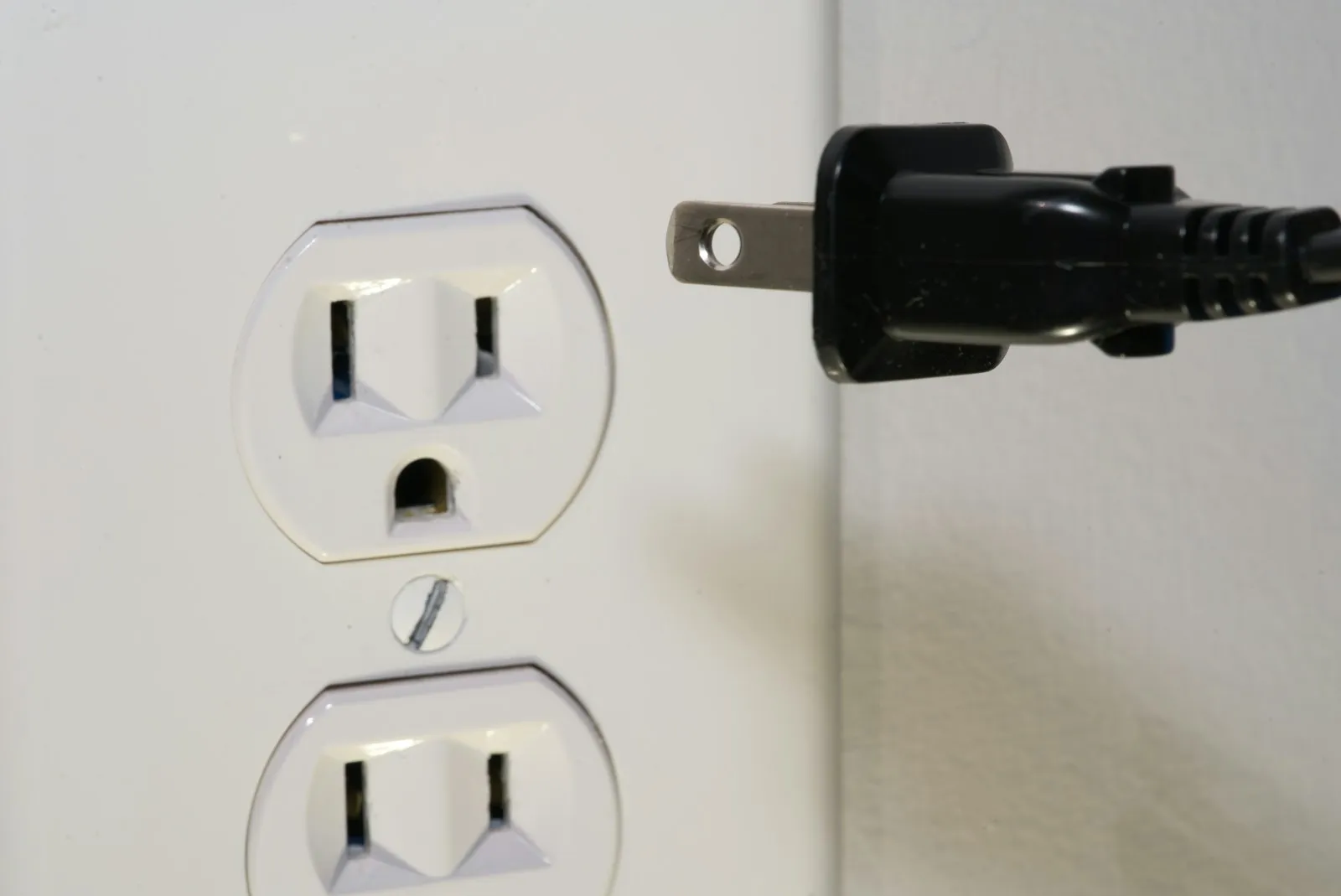
IEC 60320 covers the appliance coupler: the detachable joint between a cord and a piece of equipment. It does not cover the wall plug. That end belongs to the destination country — NEMA in North America, BS 1363 in the UK, and so on — which is why a cordset always carries two identities, one at each end.
The numbering is simpler than it looks, and getting it right removes most of the confusion in a quote:
- Odd numbers are connectors. These live on the cord and are female. C13, C15, C19.
- Even numbers are inlets. These are mounted on the equipment and are male. C14, C16, C20.
So a C13 connector mates with a C14 inlet. The pairs are always odd-then-next-even: C13/C14, C15/C16, C19/C20. When someone asks for a “C14 cord,” they usually mean a cord that fits a C14 inlet — which is a cord terminated in a C13. Confirming that in writing before tooling a run costs nothing and saves a rebuild.
One consequence of the naming trips up almost every first rack order. A rack PDU presents C13 outlets, so a jumper from the PDU to a server needs a C14 plug at the PDU end and a C13 connector at the server end. That is the cord sold as a C13-to-C14 jumper, and it is the highest-volume cord in any data centre.
The full IEC 60320 reference
Below is every coupler pair in general use, with both ratings. Note the second column — it is the one most reference charts omit.
| Coupler pair | IEC rating | North America (UL/CSA) | Conductors | Typical use |
|---|---|---|---|---|
| C1 / C2 | 0.2 A · 250 V | 0.2 A · 125/250 V | 2 | Shavers, clocks, very low draw |
| C5 / C6 | 2.5 A · 250 V | 7 A · 125 V | 3 | Laptop bricks, projectors — the “cloverleaf” |
| C7 / C8 | 2.5 A · 250 V | 7 A · 125 V | 2 | Figure-8: radios, consoles, small AV |
| C9 / C10 | 6 A · 250 V | 6 A · 250 V | 2 | Older audio equipment |
| C13 / C14 | 10 A · 250 V | 15 A · 125/250 V | 3 | Servers, switches, PDUs, desktops |
| C15 / C16 | 10 A · 250 V | 15 A · 125/250 V | 3 | Hot-running gear: PoE switches, some UPS |
| C15A / C16A | 10 A · 250 V | 15 A · 125/250 V | 3 | Very hot conditions |
| C17 / C18 | 10 A · 250 V | 15 A · 125/250 V | 2 | Ungrounded: consoles, some TVs |
| C19 / C20 | 16 A · 250 V | 20 A · 125/250 V | 3 | High-density racks, blade servers, large UPS |
| C21 / C22 | 16 A · 250 V | 20 A · 125/250 V | 3 | High current in a very hot enclosure |
| C23 / C24 | 16 A · 250 V | 20 A · 125/250 V | 2 | Ungrounded high current |
IEC and North American ratings per the StayOnline IEC 60320 reference chart, cross-checked against IEC 60320-1:2021. Verified 17 August 2026. Always confirm the rating printed on the specific listed part.
The two-column split is not a rounding difference. IEC rates C13/C14 at 10 A; UL and CSA list the same coupler at 15 A. Both are correct within their own approval system, and the one that governs your order is the one for the market you ship to. A European engineer specifying to 10 A and a US buyer quoting 15 A can be describing the identical part and still fail to agree on a spec sheet.
Temperature class: the C13 and C15 trap
The C-number does not only set a current. It sets a temperature condition at the pins, and this is where an otherwise careful order goes wrong.
| Condition | Rating at the pin | Connector |
|---|---|---|
| Cold | 70 °C | C13 |
| Hot | 120 °C | C15 |
| Very hot | 155 °C | C15A / C16A, C21 / C22 |
Temperature conditions per Interpower. Verified 17 August 2026.
A C13 and a C15 carry the same current and look nearly the same in a listing photo. The C15 has a notch, and the matching C16 inlet carries a key opposite the earth pin. That key does one job: it prevents a cold-condition connector from being pushed into a hot-condition inlet. Equipment that runs hot cannot be fitted with a cord that is not rated for the heat.
The keying runs one way only. A C15 connector fits a C16 inlet and a standard C14 inlet, so a C15 cord is backwards compatible with ordinary C14 equipment. A C13 will not enter a C16 at all. For a mixed rack, that asymmetry is useful: the C15 is the cord that fits everywhere, and standardising on it removes a category of field error at a small premium per unit.
The connector is a ceiling, not a promise
Here is the part a reference chart cannot tell you: the coupler rating is the ceiling of the assembly, not a description of it. What the cord actually carries is decided by the cordage — the gauge, and the jacket type printed along it.
Ampacity for flexible cord is set by NEC Table 400.5. An 18 AWG cord uses measurably less copper than a 16 AWG one and costs less to build; on a low-draw device that is a legitimate saving, and on a dense rack it is a heat problem wearing a correct-looking C13 on the end. The connector code stays the same either way.
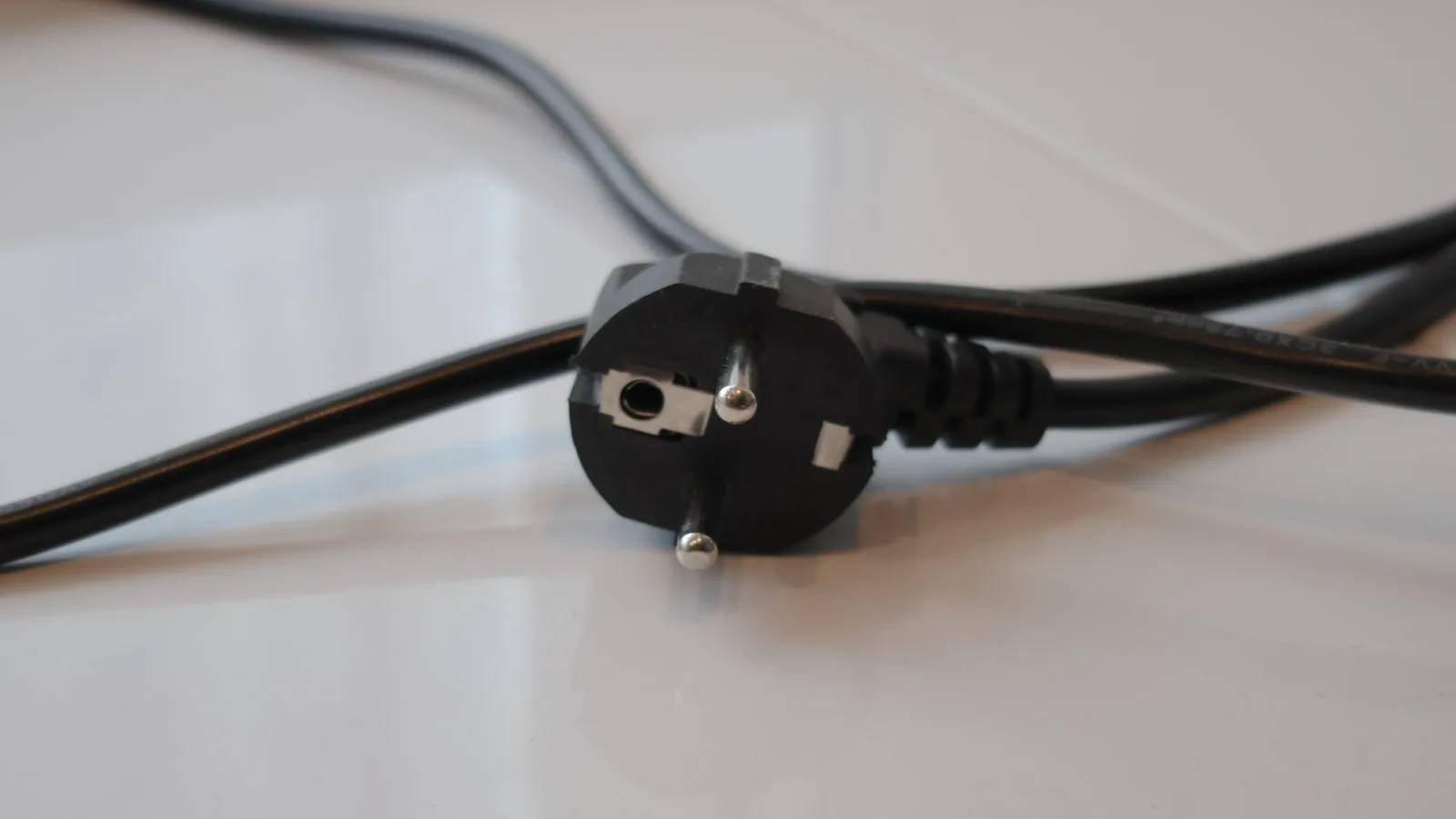
The assembly is also only as hot-rated as its weakest layer. A 120 °C C15 connector on cordage rated for less does not give you a 120 °C cordset — it gives you a mismatch that will pass a visual inspection and fail on a hot day in a closed cabinet.
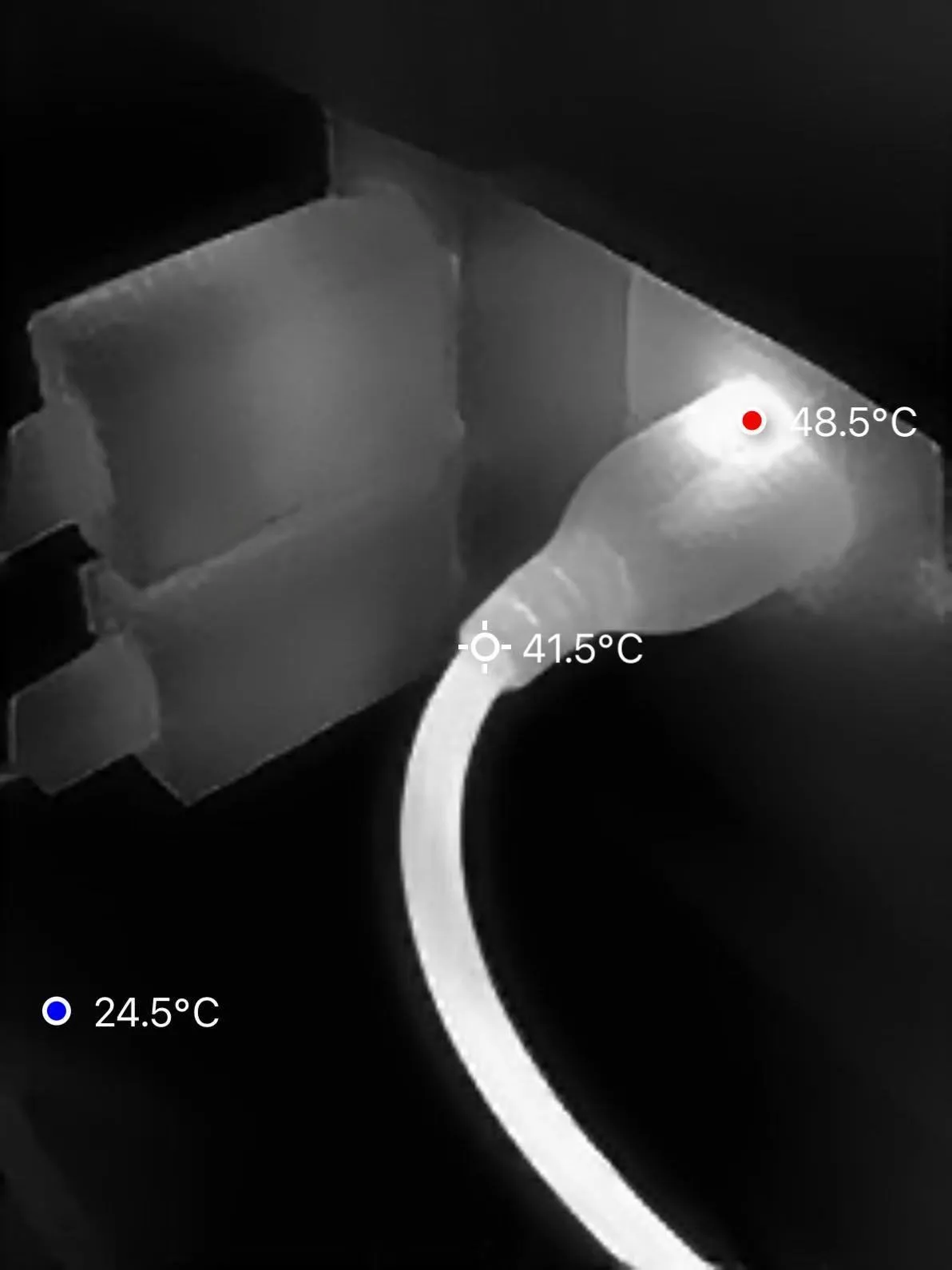
We have measured what that looks like. In our own bench study of seven retail C13 cords, every sample carried honest copper for its printed gauge — 1,587 to 2,724 circular mils, 98 % to 115 % of nominal. But under a ten-minute heat soak at roughly 12.5 A, 2 of the 7 ran hotter at the moulded plug than anywhere on the cord itself, peaking at 48.5 °C and 46.5 °C. Heat concentrating in a moulded joint rather than along the conductor is an assembly signature, not a copper one — and no connector code on a datasheet would have predicted it.
Specifying a cordset without a drawing
Most buyers do not arrive with a drawing, and they do not need one. Six lines are enough for a power cord manufacturer to quote a build rather than pull stock:
| Spec line | What to state | Why it decides the build |
|---|---|---|
| Equipment end | The IEC 60320 coupler code (C13, C15, C19…) | Sets the current ceiling and the temperature class |
| Wall end | The national plug (NEMA 5-15P, and so on) or a second coupler | Decides the destination market and its approvals |
| Cordage | Gauge and jacket type, or just the load in amps | Sets real ampacity — the number the coupler code hides |
| Length | Finished length, end to end | Drives moulding tooling and cost per unit far more than buyers expect |
| Approvals | Every market the finished gear ships to | UL/cUL, VDE, CCC, PSE are per-market, not universal |
| Origin | Whether country of origin is a requirement | Decides which line builds it, and your customs exposure |
If you can state the load in amps and the two ends, a manufacturer can work back to the rest. That is the difference between a custom power cord built to a spec and a stock cord that happens to be close: the first is quoted from those six lines, the second is quoted from what is in the warehouse. For bulk power cords on a repeating SKU, the same six lines become the part number, and the only remaining variables are carton marking and lead time.
Origin belongs on that list now rather than in a footnote. Two mechanically identical C13 cords can land at different costs depending on where they were actually built, and that difference only holds up if the origin is real and documented per unit — see how to verify a Vietnam country of origin for what that evidence looks like at entry.
Getting the cord right
The C-number is a good shorthand and a poor specification. It fixes the current ceiling, the temperature class, and the mechanical fit — genuinely useful, and enough to stop a C13 from being pushed into a C16. It says nothing about the copper, the jacket, the moulded joint where the heat actually collects, or the country the cord came from. Read the coupler code and the cordage legend together, state your load rather than guessing a gauge, and treat the temperature class as a property of the whole assembly.
Kestner builds IEC cordsets on its own lines, C13/C14 through C19/C20, with the vetting checklist we would want applied to us as the standard. If you have the coupler codes and the load, send them over and we will quote the cord built to them.
Frequently asked
What is IEC 60320?
IEC 60320 is the standard for appliance couplers — the detachable connector and inlet that join a power cord to a piece of equipment. The current edition is IEC 60320-1:2021 (Edition 4.0, published 27 July 2021), titled "Appliance couplers for household and similar general purposes". It defines the C-numbered sheets everyone quotes: C13, C14, C19, C20 and the rest. It does not cover the wall plug — that is set by each country, such as NEMA in North America.
What is the difference between a C13 and a C15?
They look nearly identical and share the same current rating, but they are rated for different temperatures. C13 is the cold-condition connector at 70 °C; C15 is the hot-condition connector at 120 °C, with a notch in the body. The matching C16 inlet has a key that physically blocks a C13 from being inserted, so gear that runs hot cannot be fitted with a cord that is not rated for it.
Can I use a C15 cord on equipment with a C14 inlet?
Yes. The keying works in one direction only: a C15 connector fits both a C16 inlet and a standard C14 inlet, so a C15 cord is backwards compatible with C14 equipment. The reverse is blocked — a standard C13 will not enter a C16. If you standardise a mixed rack on one cord, the C15 is the one that fits everywhere.
Why is a C13 cord rated 10 A in Europe and 15 A in North America?
Because two different approval systems rate the same coupler. IEC rates C13/C14 at 10 A, 250 V. In North America, UL and CSA list the same coupler at 15 A, 125/250 V. Neither number is wrong — they belong to different listings, and the rating that governs is the one for the market you are shipping to. The same split runs through the range: C19/C20 is 16 A by IEC and 20 A in North America.
What is a C13 to C14 power cord?
It is a rack jumper. A server has a C14 inlet, so the cord end that mates with it is a C13. A rack PDU has C13 outlets, so the cord end that mates with the PDU is a C14 plug. A short cord with a C14 on one end and a C13 on the other therefore runs from PDU to server — which is why it is the most ordered cord in any data centre.
Which IEC connector do I need for a high-density rack?
Above the 10 A / 15 A ceiling of C13/C14, the step up is C19/C20 at 16 A by IEC and 20 A in North America. Blade chassis, large UPS units and high-density PDUs are normally built around C19/C20 for that reason. If the gear also runs hot, C21/C22 carries the same current at a 155 °C class.
Sources
- IEC 60320-1:2021, Edition 4.0 — Appliance couplers for household and similar general purposes, Part 1: General requirements (published 27 July 2021)IEC 60320-1
- The safety standard for cord sets and power-supply cordsUL 817
- IEC 60320 reference chart — IEC and North American amperage ratings by couplerStayOnline
- Designing with specific IEC 60320 connectors and inlets — temperature conditions and C16 keyingInterpower
- NFPA 70 (NEC) Table 400.5 — ampacity of flexible cords and cablesNational Fire Protection Association
More in this cluster
Products in this line
Ready to source this to spec?
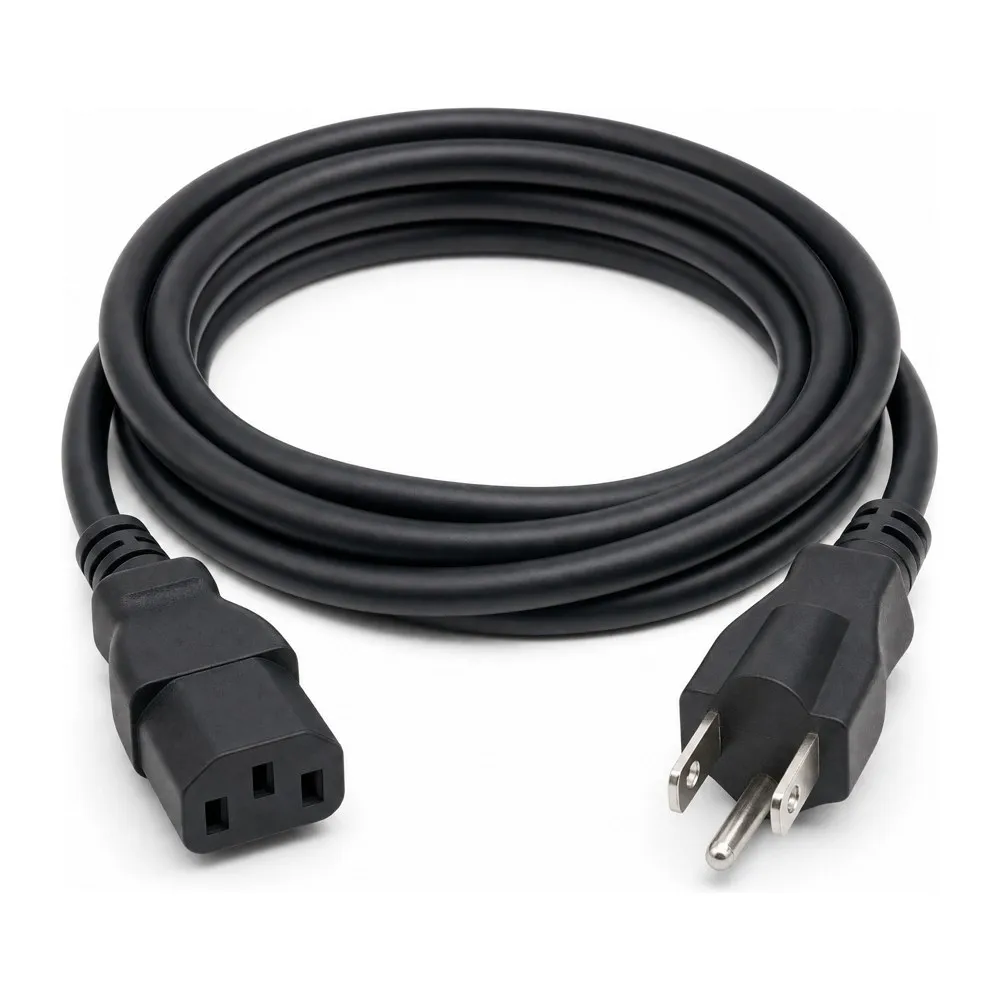
Kestner builds IEC cordsets on its own lines — C13/C14 through C19/C20, cut to your length, gauge, plug and label, in bulk or as a custom power cord. Send the coupler codes and the load, and we will quote it built.
Request a quote