Quick answer
A coaxial cable manufacturer is one of two businesses: a 50 Ω RF and microwave maker (radio, wireless, test) or a 75 Ω video and broadband maker (RG6, RG59, RG11 for CATV, CCTV, and satellite). Pick the right one, then verify the center conductor, the braid coverage, and a real NEC fire listing. Kestner builds 75 Ω coax, bulk or connectorized.
The short version
- Coax makers split by impedance: 50 Ω for RF transmit, wireless, and test gear; 75 Ω for video, CATV, CCTV, and satellite. Most "who makes the best coax" lists mix the two.
- The center conductor is where cost gets cut. Copper-clad steel is normal for CATV drops; solid copper matters when the coax also carries DC power or long baseband video; copper-clad aluminum sold as copper is the fraud.
- A magnet tells you in five seconds: it sticks to a copper-clad steel center conductor and not to solid copper. A blade scrape exposes aluminum under copper.
- Shield is a spec, not an adjective: ask for the braid coverage in percent and the layer count (dual, tri, or quad shield), not "high shielding."
- For in-building runs the jacket needs a fire listing under NEC Article 820 (CATV, CATVR, CATVP), or a CM, CMR, or CMP substitute. Ask for the listing, then check it.
Search for a coaxial cable manufacturer and the first page mixes two different industries. One builds 50 Ω RF and microwave cable for radios, wireless gear, and test benches. The other builds 75 Ω video and broadband cable, RG6, RG59, and RG11, for CATV, CCTV, satellite, and antenna runs. Both say “coax,” and buying from the wrong one is the first mistake. The second is subtler: two reels of RG6 can look identical and differ in the metal at the center, the amount of braid around it, and whether the fire listing printed on the jacket is real. Here is how to pick the right kind of maker, and how to check what you are actually getting.
Two kinds of coax maker
BLUF: decide the impedance first. If the cable carries video, broadband, satellite, or CCTV signal, you need a 75 Ω maker. If it feeds a transmitter, an antenna on a radio, or a piece of test equipment, you need a 50 Ω maker.
| 50 Ω RF / microwave maker | 75 Ω video / broadband maker | |
|---|---|---|
| Typical cable | RG58, RG174, low-loss and semi-rigid types | RG6, RG59, RG11 |
| Typical connectors | SMA, N-type, TNC, BNC (50 Ω) | F, BNC (75 Ω), RCA |
| Used for | Transmitters, wireless, radar, lab test | CATV, satellite, CCTV, broadband, antenna drops |
| Order shape | Short precision assemblies, tight tolerance | Bulk spools and connectorized drops at volume |
| Judge them on | Loss at frequency, phase stability, VSWR | Conductor, braid coverage, impedance consistency, fire listing |
Kestner is a 75 Ω maker. If your job is 50 Ω RF or microwave, a specialist RF house is the right counterparty, and we will tell you so rather than quote it.
The center conductor: where the cost is cut
BLUF: ask what metal is at the center, and make sure it matches the job. This is the one spec that changes both price and performance, and it is invisible once the cable is in the jacket.
Three conductors show up in 75 Ω coax:
- Copper-clad steel (CCS). A steel core with a copper skin. It is the normal conductor in CATV drop cable, and the ANSI/SCTE 74 drop-cable spec allows it, because at broadband frequencies the signal travels in the outer copper layer (skin effect) and the steel adds pull strength. It is cheaper than solid copper and fine for RF.
- Solid bare copper. The right choice when the coax also carries DC power or low-frequency signal: satellite runs that power the LNB on the dish, multiswitch feeds, and long analog CCTV runs. Steel has far higher DC resistance than copper, so on those runs CCS drops voltage and signal.
- Copper-clad aluminum (CCA) sold as copper. This is the fraud, the same one that shows up in cheap Ethernet cable. It is lighter, cheaper, and more brittle, and it fails the resistance a copper spec implies.
The check takes seconds. Strip an inch and hold a magnet to the center conductor: it sticks to copper-clad steel and does not stick to solid copper. Scrape the conductor with a blade: silver-white metal under a thin copper skin is aluminum. Do both on a sample from the actual lot, not the sample that came with the quote.
Shield, dielectric, and impedance
BLUF: “high shielding” means nothing on a quote. Ask for the layer count and the braid coverage in percent, and ask how impedance is held along the length.
- Shield layers. Standard RG6 is dual shield: one foil and one braid. Tri-shield adds a second foil. Quad-shield is foil, braid, foil, braid. More layers reject more noise, which matters in electrically busy buildings and near motors or RF sources, but they make the cable larger and stiffer and need matching connectors.
- Braid coverage. Stated as a percentage of the core the braid covers. Ask for the number on the spec sheet, and check that the braid metal (aluminum, tinned copper, or bare copper) matches what you were quoted.
- Dielectric. Gas-injected foam polyethylene is standard on modern RG6. What matters is that it is concentric and consistent, because the dielectric sets the impedance. An off-center core shows up as reflections on a sweep test, not on a continuity check.
Jacket and fire listing
BLUF: inside a building, the jacket needs a real fire listing for the space it runs through. Ask for the listing, then verify it yourself.
Coax for CATV and antenna distribution is covered by NEC Article 820, with its own ratings: CATVP for plenum spaces, CATVR for risers, and CATV for general use. Communications-cable ratings can substitute, so a CMP, CMR, or CM listing is also acceptable in the matching space. The CATV cable standard behind the listing is UL 1655. Outdoors, look for a UV-resistant PE jacket. For burial, ask for a flooded (gel-filled) direct-burial construction. For aerial drops, ask for an integrated messenger wire.
A print legend that says “UL” is not the same as a listing. The legend should name the rating and carry a listing reference you can check against UL Product iQ. If the supplier cannot give you a listing you can look up, the jacket is a claim, not a rating.
Bulk spool or connectorized
BLUF: decide early whether you are buying cable or finished drops, because it changes the supplier’s process, the MOQ, and what you have to inspect.
Bulk on the spool is priced by the foot and the reel length (500 ft and 1,000 ft boxes and reels are common), with MOQ driven by the jacket color, print legend, and conductor spec. Custom print legends and private-label boxes are a normal request at volume.
Connectorized drops add a termination process to the quote. Specify the connector (F, BNC, or RCA), whether it is compression, crimp, or twist-on, the length and tolerance, and the test. Compression F connectors matched to the exact cable (RG6 dual vs quad shield take different sizes) are the usual standard for professional installs. A drop that is terminated on the line should come with a continuity and short test on every piece.
What to demand before the PO
| Demand | Why it matters | How to verify |
|---|---|---|
| Center conductor stated | CCS, solid copper, and CCA price and perform differently | Magnet and blade test on a sample from the shipped lot |
| Braid coverage in percent | ”High shielding” is not a spec | Spec sheet number, then strip a sample and look |
| Fire listing for the space | Inspectors check the rating, not the brand | Rating on the print legend, listing checked in UL Product iQ |
| Impedance and sweep test | Reflections do not show on a continuity check | Sweep or return-loss result for the lot |
| Connector matched to cable | Wrong-size F connectors loosen and leak signal | Connector part number against the cable type and shield count |
| Per-lot origin record | Origin sets your tariff exposure and customs risk | Country of origin and supporting records, not a verbal answer |
So, how do you choose
Start with the impedance: 75 Ω for video, broadband, satellite, and CCTV; 50 Ω for RF transmit, wireless, and test. Then judge a 75 Ω maker on what is inside the jacket: the center conductor matched to the job, braid coverage stated in percent, consistent impedance, a fire listing you can verify, and an origin record per lot. The same discipline applies to Ethernet cable, where the shortcut is also hidden inside the jacket. If you want 75 Ω coax built to that spec, bulk or connectorized, send us the spec and the run and we will quote it with the conductor, shield, and listing written down, and the coax options to match.
Frequently asked
Who makes the best coaxial cable?
It depends on which kind of coax. For 50 ohm RF and microwave work, specialist makers build low-loss and precision assemblies. For 75 ohm video and broadband, the best cable is the one that meets its spec: the right center conductor for the job, the braid coverage stated in percent, foam dielectric with consistent impedance, and a real NEC fire listing. Judge a manufacturer on those, not on the brand on the box.
What is the difference between 50 ohm and 75 ohm coaxial cable?
Impedance, set by the ratio of the center conductor to the shield and by the dielectric. 50 ohm coax (RG58, RG174, low-loss types) is the standard for RF transmitters, wireless, and test equipment because it balances power handling and loss. 75 ohm coax (RG6, RG59, RG11) is the standard for video, CATV, satellite, and CCTV because it gives lower loss for receive signals. Mixing them causes reflections and signal loss.
Is copper-clad steel coaxial cable bad?
No. Copper-clad steel (CCS) is the normal center conductor in CATV drop cable, because at broadband frequencies the signal travels in the outer copper layer and the steel core adds strength. It is the wrong choice where the coax also carries DC power over a long run, such as satellite LNB power, or long baseband CCTV video, because steel has much higher DC resistance. For those, specify solid copper.
What is the difference between RG6 and RG59?
RG6 has a larger center conductor (about 18 AWG) and lower loss at high frequencies, so it is the standard for CATV, satellite, and broadband. RG59 has a thinner conductor (about 20 to 22 AWG) and higher loss, so it suits short runs and analog CCTV video. RG11 (about 14 AWG) is for long trunk runs. All three are 75 ohm.
What does quad shield mean on coaxial cable?
Four shield layers: foil, braid, foil, braid. Standard RG6 has two (one foil plus one braid, often around 60 percent coverage). Tri-shield adds a second foil; quad-shield adds a second foil and a second braid. More layers improve noise rejection in electrically busy installs, at the cost of a stiffer, larger cable that needs matching connectors.
Sources
- ANSI/SCTE 74, specification for braided 75 ohm flexible RF coaxial drop cableSCTE
- NEC (NFPA 70) Article 820, community antenna television and radio distribution systemsNFPA
- UL 1655, community-antenna television cablesUL
- UL Product iQ, listing verificationUL
- Country-of-origin marking and entry treatmentUS Customs & Border Protection
More in this cluster
Products in this line
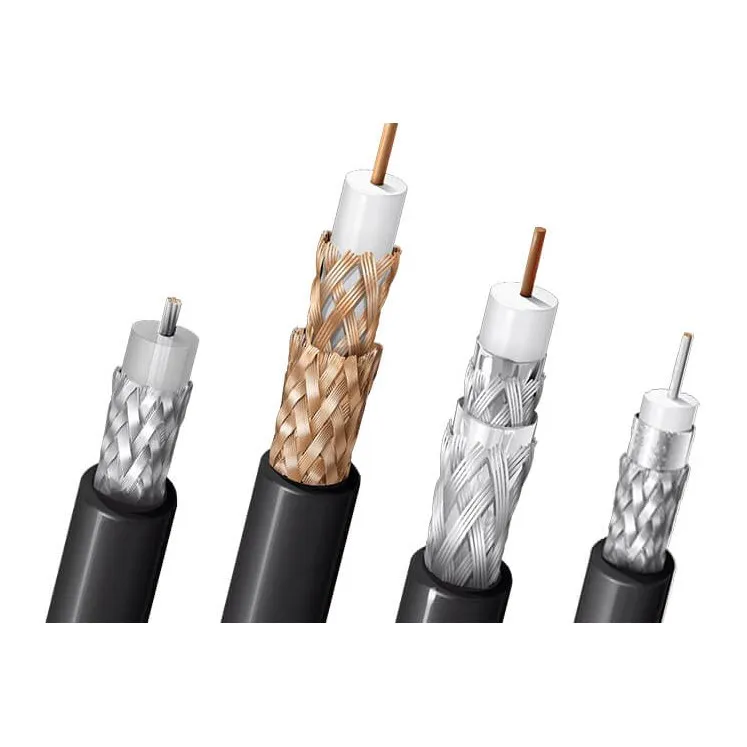 Coaxial cablesRG6, RG59, and RG11, 75 ohm, bulk on the spool or connectorized with F, BNC, or RCA, in the jacket rating your install requires, origin-documented.View →
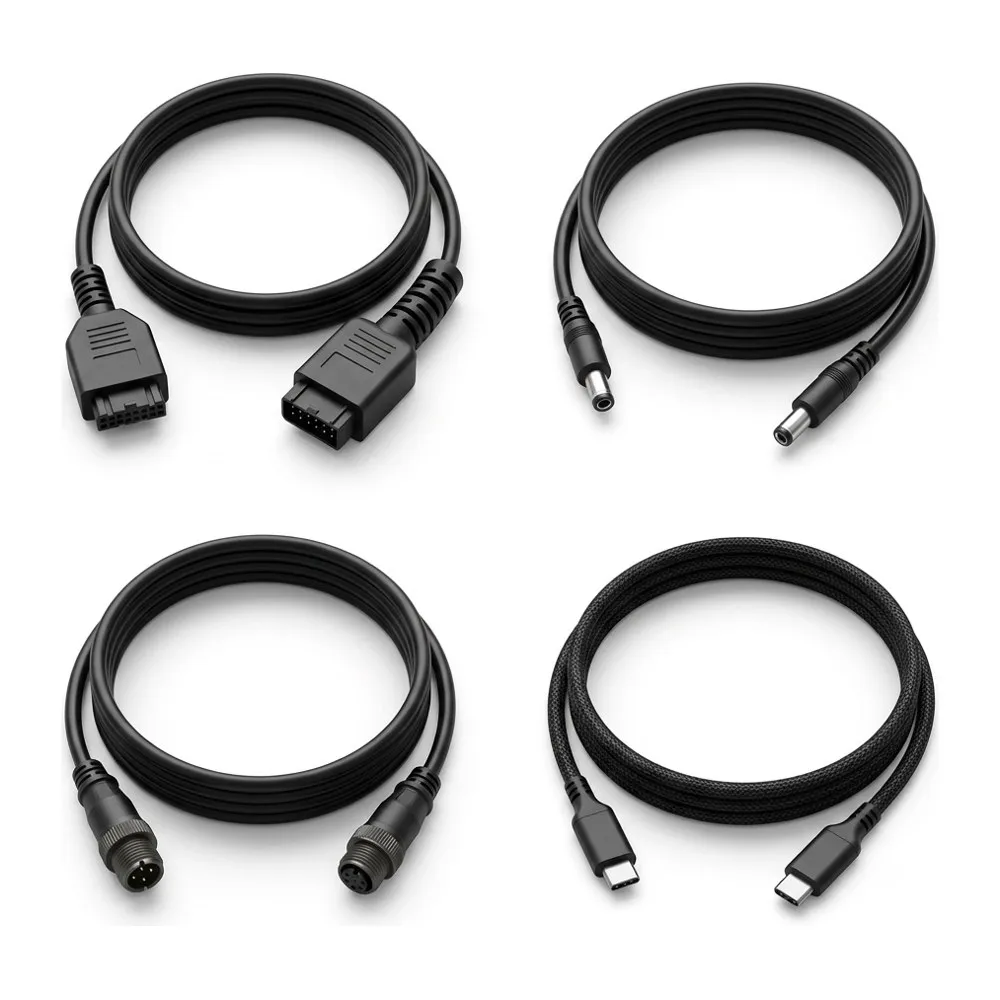 Custom cable assembliesCopper and hybrid assemblies to your drawing, with the termination method specified and the origin paper that survives entry.View →
Ready to source this to spec?
Kestner builds 75 ohm coax on its own lines: RG6, RG59, and RG11, with the center conductor you specify (solid copper or copper-clad steel), the braid coverage stated in percent, and the fire rating your install needs, bulk on the spool or connectorized with F, BNC, or RCA. Send the spec and the run, and we will quote it with the origin record in hand.
Request a quote