
Verified against HTSUS Rev. 14 · updated monthly · changelog
Cable assemblies pay the same tariff stack as power adapters — 25% Section 301 on Chinese origin plus the 12.5% Section 301 forced-labor duty on both origins — over a base rate that changes with the cable type. A USB-C, HDMI, or AV assembly (HTS 8544.42.90) pays an effective 40.1% from China and 15.1% from Vietnam; coaxial pays 42.8% / 17.8%; optical fiber 37.5% / 12.5%. The country-of-origin rules are identical to power — only the base rate moves.
Cable assembly tariffs by HTS code
| HTS code · description | MFN base | China | Vietnam |
|---|---|---|---|
USB-C, USB, HDMI, Ethernet patch, AV & power-cord assemblies — 8544.42.90 | 2.6% | 40.1% | 15.1% |
Coaxial cable — 8544.20.00 | 5.3% | 42.8% | 17.8% |
Optical fiber cables — 8544.70.00 | Free | 37.5% | 12.5% |
China figures are MFN base + 25% Section 301 + 12.5% forced-labor §301; Vietnam figures are MFN base + 12.5% forced-labor §301, since the 25% List 3 Section 301 applies only to Chinese-origin goods. Mexico-origin assemblies that qualify under USMCA enter at 0.0%. For the full power stack alongside these codes, see the duty stack.
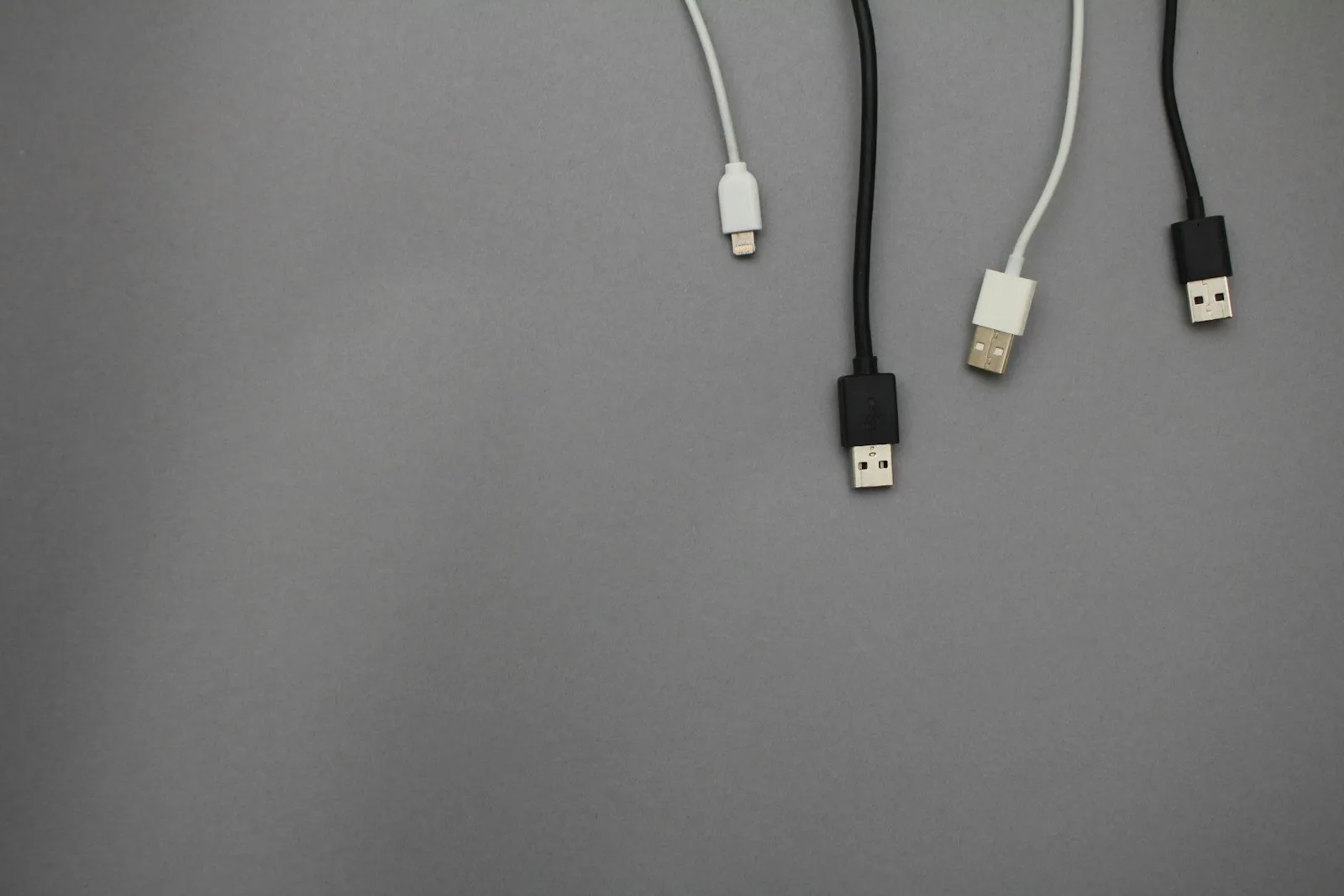
Why the base rate differs
The Section 301 layers (25% + 12.5%) are the same across the cable line; the MFN base is what separates one code from another.
- 8544.42.90 — 2.6%. USB-C, USB, HDMI, DisplayPort, Ethernet patch, AV, and power cords — insulated conductors for ≤1,000 V, fitted with connectors. This is where most of a connectivity order classifies.
- 8544.20.00 — 5.3%. Coaxial cable and other coaxial conductors — the highest base of the common cable codes.
- 8544.70.00 — Free. Optical fiber cables made up of individually sheathed fibers. No base rate, so the entire landed duty is the Section 301 and 122 overlay.
The same origin logic as power
Origin is set by substantial transformation, exactly as it is for a power supply. A cable assembly is Vietnamese if the transforming operations — drawing and stranding the conductor, extruding insulation, and molding and terminating the connectors — happen in Vietnam. Take finished Chinese cable and only mold a connector onto the end in Vietnam, and it is still Chinese; entering it as Vietnamese is transshipment, assessed the full Chinese-origin rate with every layer reinstated, plus penalties.
The documents that settle a cable assembly’s origin are the same four that settle a power supply’s — the checklist is in how to verify a Vietnam country of origin. To source USB-C, custom cable, and harness builds to your spec, see Connectivity.
Sources
- MFN base — USB-C, HDMI, AV & power-cord assembliesHTSUS 8544.42.90 (2.6%)
- MFN base — coaxial cableHTSUS 8544.20.00 (5.3%)
- MFN base — optical fiber cablesHTSUS 8544.70.00 (Free)
- Section 301 — 25% on Chinese origin9903.88.01 / 9903.88.03
- Section 301 forced-labor duty — 12.5%, eff. 2026-07-24 (replaced §122)USTR Section 301 (forced-labor action)
Frequently asked
Do USB-C cables from China have Section 301 tariffs?
Yes. USB-C, HDMI, AV, and power-cord assemblies fitted with connectors classify under HTS 8544.42.90, which carries a 2.6% MFN base plus 25% Section 301 on Chinese origin and a 12.5% Section 301 forced-labor duty (both origins) — an effective 40.1%. The same assembly of Vietnamese origin pays 15.1%, because the 25% List 3 Section 301 applies only to goods of Chinese origin.
Are fiber optic cables duty-free?
The MFN base rate on optical fiber cables (HTS 8544.70.00) is Free, but Chinese-origin fiber still carries 25% Section 301 and the 12.5% Section 301 forced-labor duty, for an effective 37.5%. Vietnamese-origin fiber pays 12.5% — the forced-labor duty alone.
Do cable assemblies from Vietnam avoid the 25% tariff?
Yes, if the assembly is substantially transformed in Vietnam. Section 301 applies to goods of Chinese origin, so a genuinely Vietnamese cable assembly drops the 25% layer. Molding connectors onto finished Chinese cable is not substantial transformation and remains Chinese origin.
Changelog
We verify monthly whether or not anything changed, and say so. Corrections: write to us — fixes are published here with the date.
The tariff answer is only half of it.
The lower cable rate is only yours if the assembly is genuinely transformed where you say it is. Kestner builds USB-C and custom cable assemblies on the same lines as the power hardware, in both origins, with the substantial-transformation paper to stand behind the entry.
Request a quote